When the Images Find Each Other
Sometimes the strongest pairings can’t be forced. They emerge only after we’ve lived with the images long enough to recognize what was there all along—a shared gesture, mood, tension, or quiet correspondence.
One of the things I am learning about sequencing a photobook is not to force it.
Sometimes two photographs obviously belong together. A shared color, gesture, shape, or subject creates an immediate connection. But some of the most satisfying relationships reveal themselves only after I have lived with the images for a while.
I move photographs around. I try pairings. I separate them. I come back the next day and look again.
And sometimes, without really searching for it, something clicks.
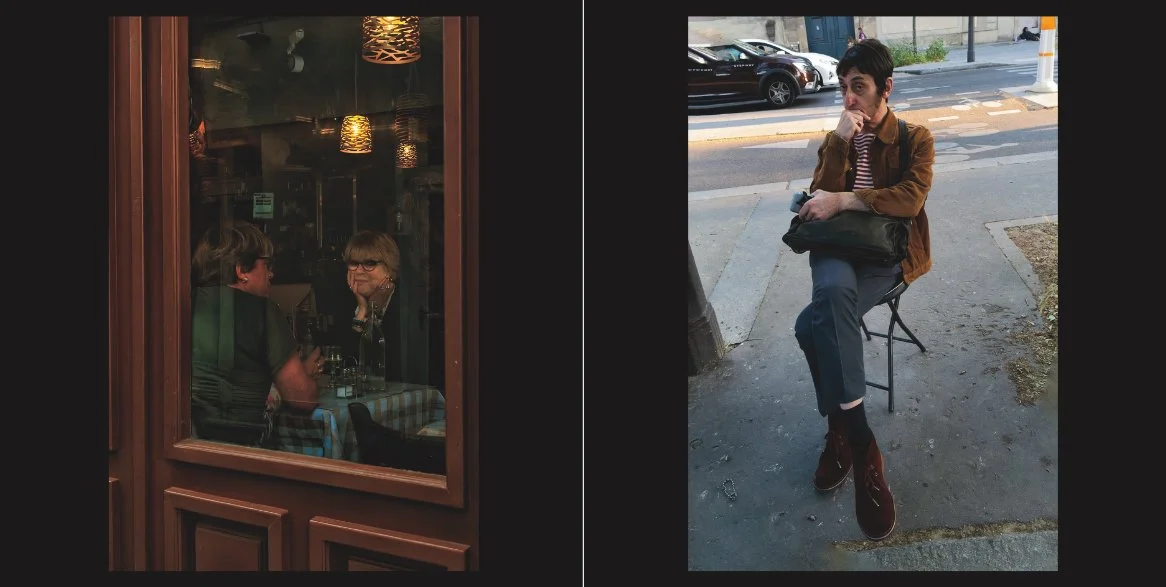
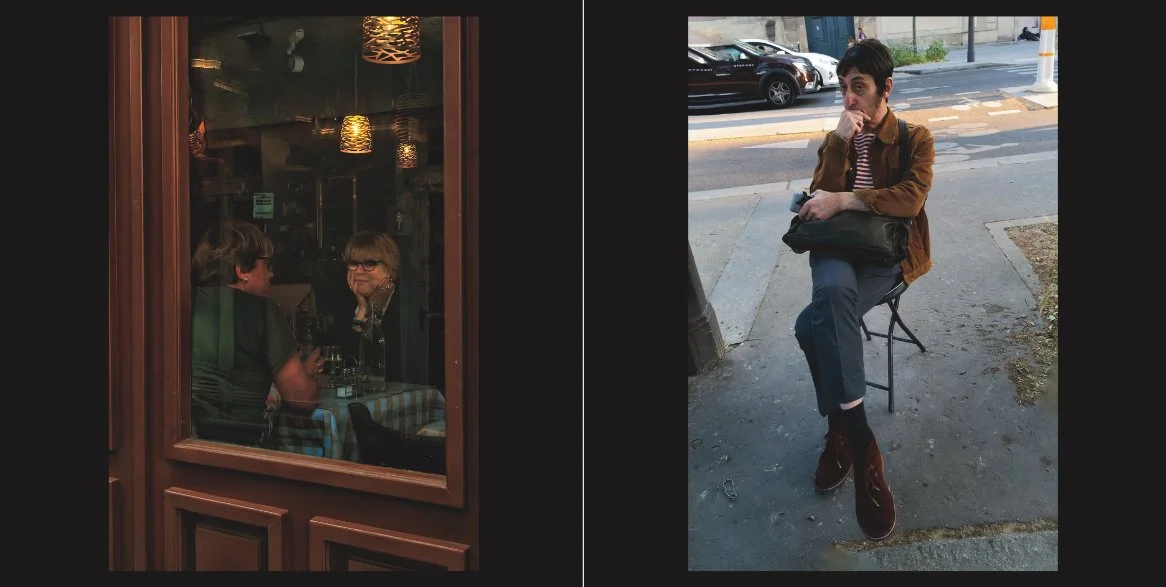
That happened recently while sequencing Unstaged Paris. I had been sitting with two photographs that, on the surface, had very little in common. In one, two women sit together inside a café, seen through a window. One rests her face against her hand as she listens to the woman across from her. In the other, a woman sits alone on a small chair beside a Paris street, her hand raised toward her face in an almost identical gesture.
Suddenly, the connection was obvious.
It wasn't subject matter that brought the photographs together. It was gesture, mood, and contrast.
One image is about companionship; the other suggests solitude. One is enclosed in the warm interior of a café; the other is exposed to the street. One woman is absorbed in another person; the other seems absorbed in her own thoughts.
Yet that small, repeated gesture quietly binds the two photographs.
Once I saw it, the pairing felt almost inevitable.
This is one of the reasons I have come to enjoy sequencing nearly as much as making photographs. A photobook creates relationships that did not exist when the shutter was released. Two moments made independently—perhaps minutes or miles apart—can eventually find one another and create a third meaning that belongs to neither photograph alone.
But sometimes that relationship cannot be hurried.
The temptation is to keep moving things around until a solution appears. I am learning instead to sit with the work. To leave a sequence unresolved. To return to it later with fresh eyes.
Photographs have a strange way of revealing what they need when we give them enough time.
Sometimes the best thing we can do is simply keep looking.
Eventually, the images find each other.
The Layers Are the Subject
We rarely see only one thing. Our world is layered with reflections, gestures, color, architecture, and passing figures. In this Note, I explore why those layers are not distractions from the subject—they are the subject.
When we encounter a scene, we rarely see only one thing.
Our attention moves. A flash of color catches us first. Then a face. A gesture. Something behind glass. A reflection that initially seemed unimportant. And sometimes, only after looking for a while, we discover something that had been there all along.
That is how I experience the world with a camera.
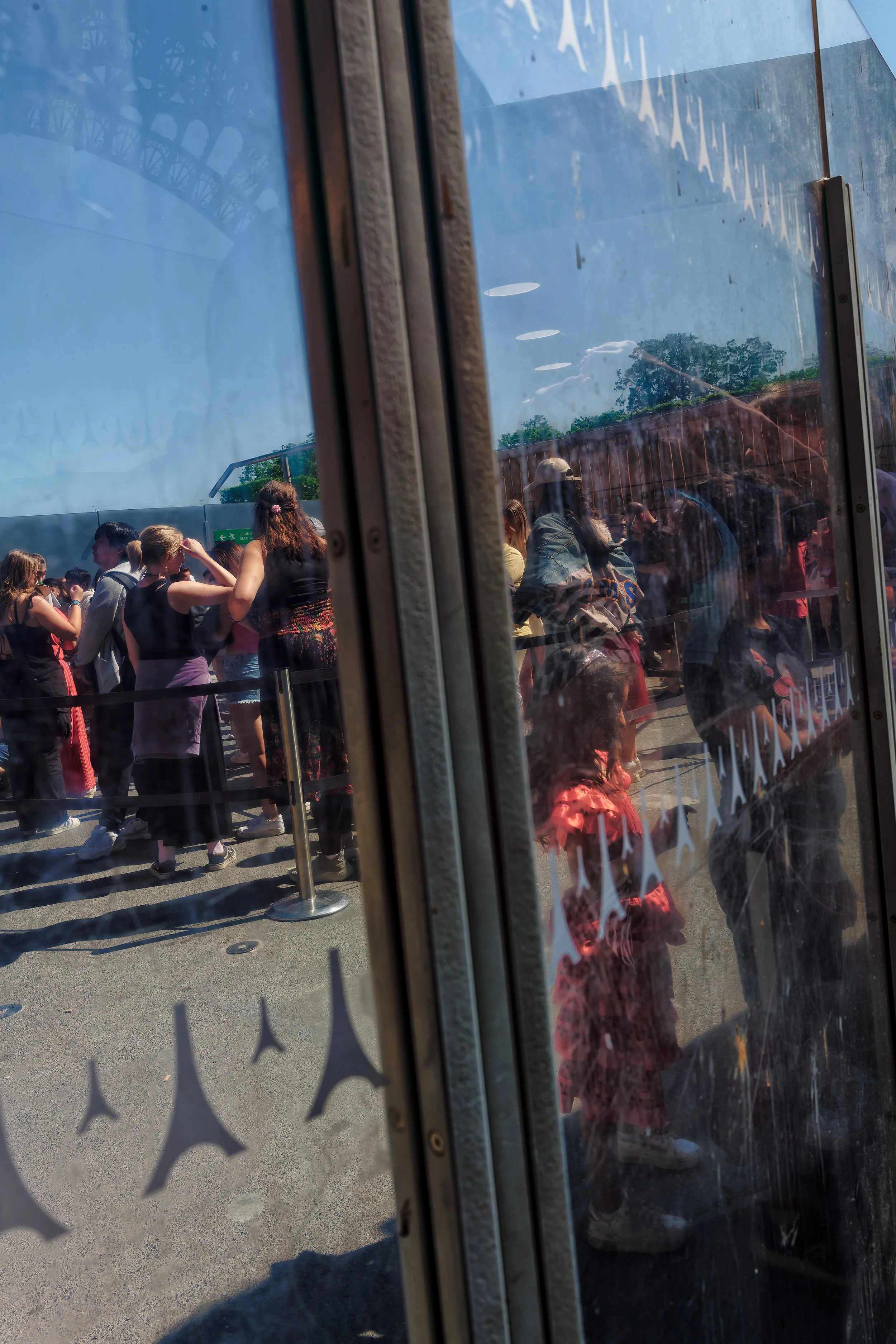
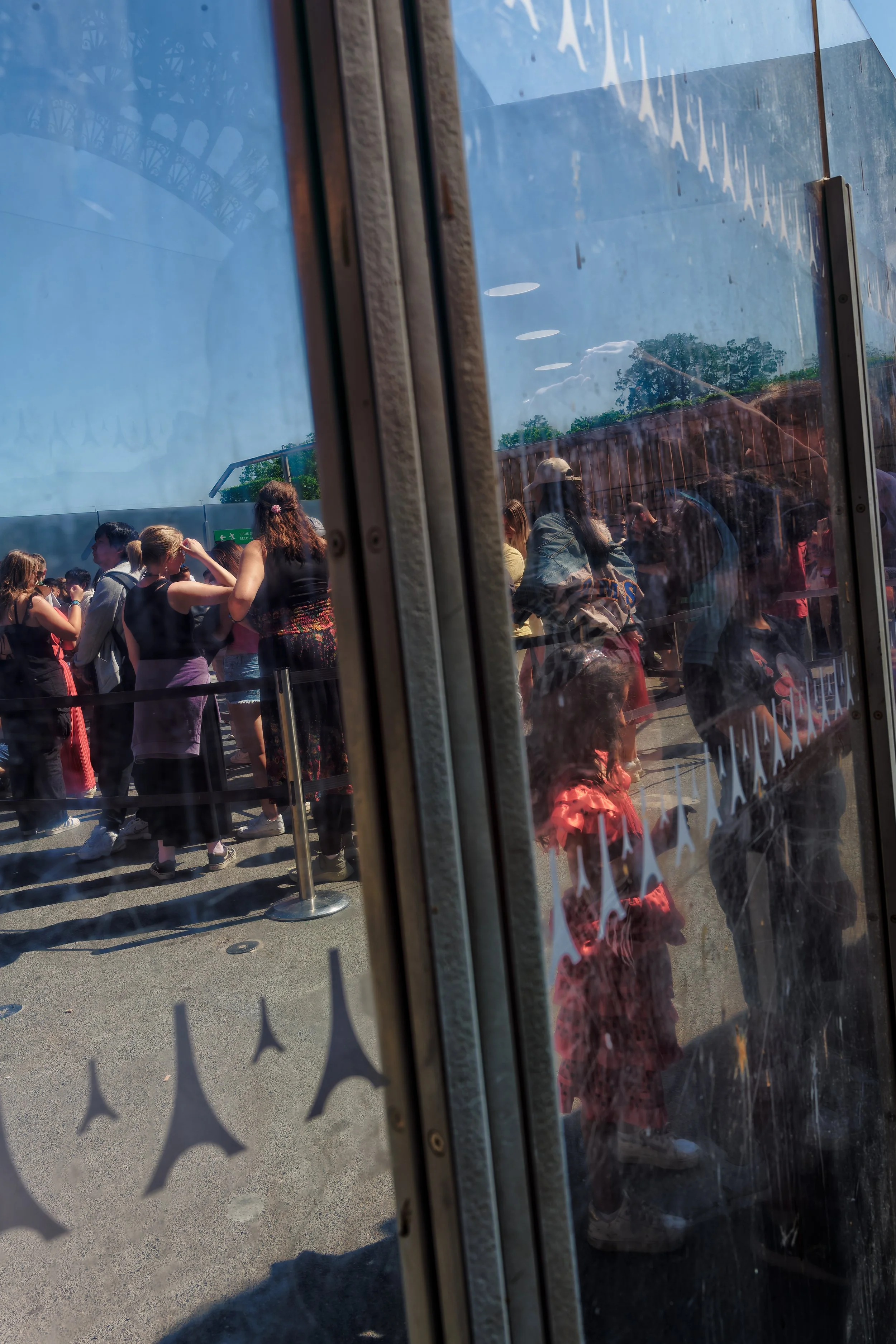
In this photograph, my eye first goes to the red-dressed figure in the lower right. From there, it moves into the crowd and across the glass, where figures, reflections, structure, and fragments of the scene begin to overlap. Only then do I notice the faint reflection of the Eiffel Tower hovering in the upper left.
Had the Eiffel Tower been immediately obvious, the photograph would have become about the Eiffel Tower. But here it is only one element among many—Paris revealed gradually rather than announced.
That matters to me.
I am increasingly drawn to photographs that resist reducing a scene to a single subject. Glass may hold the street and the interior at the same time. Reflections can place strangers beside one another who never actually shared the same space. Color can connect distant parts of the frame. A familiar landmark can become little more than an apparition.
These are not distractions from the subject.
The layers are the subject.
We live in a visually complicated world. Foreground and background coexist. People pass behind and through reflections. Signs, architecture, gestures, light, color, and memory compete for our attention. Our eyes move among them, continually deciding what matters and discovering relationships that may exist for only a fraction of a second.
I do not want photography to simplify that experience too much.
I want the viewer to enter the frame, move through it, discover something, reconsider it, and perhaps find something else on a second or third look.
For me, that process of discovery is very close to what seeing actually feels like.
And increasingly, it is what I want my photographs to be about.
The Quiet Conversation Between Photographs
The finest photobooks are built not only from memorable photographs, but from the quiet conversations that occur between them. Sequencing transforms individual images into a unified visual experience.
One of the greatest pleasures of creating a photobook is discovering that two photographs can say something together that neither can say alone.
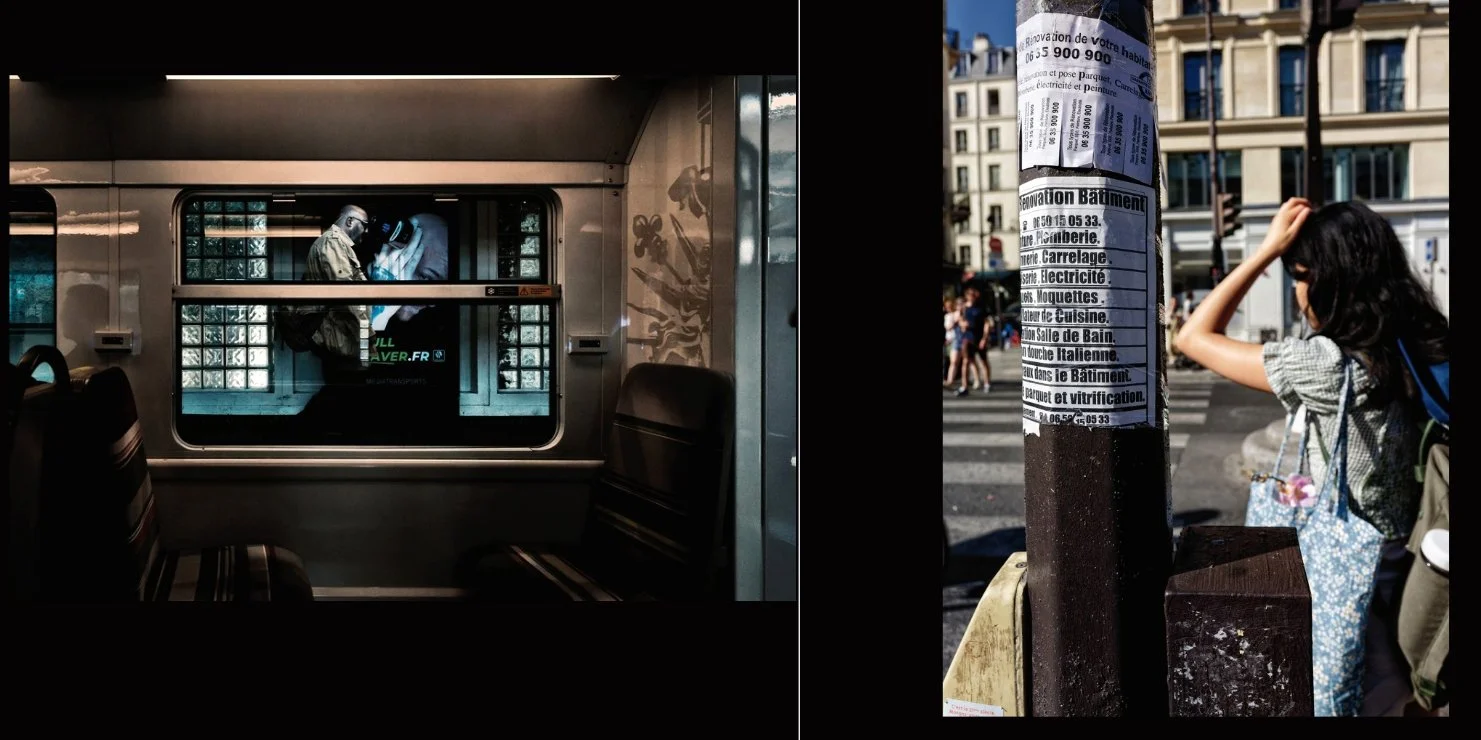
When editing a book, I spend as much time thinking about the relationships between photographs as I do the photographs themselves. A successful sequence isn’t created simply by placing strong images side by side. It’s created by finding the quiet visual conversations that exist between them.
The pairing shown here is one example.
At first glance, Passing Resemblance and Small Adjustments appear to have little in common. One is layered and visually complex, asking the eye to move through reflections, overlapping figures, and the oversized advertisement of a man holding an electric shaver to his face. The other is quieter, centering on a woman whose raised hand naturally becomes the visual anchor of the frame.
But look a little longer.
The woman’s raised hand in Small Adjustments quietly echoes the gesture of the hand holding the electric shaver in Passing Resemblance. One gesture exists within the constructed world of advertising; the other is an unguarded moment observed on the street. They are different in meaning, yet remarkably similar in form.
Other visual relationships begin to emerge as well. Rounded forms repeat across the spread. The muted palette creates a seamless transition from one photograph to the next. Human presence anchors both images, while each rewards a slower reading that reveals connections not immediately apparent.
None of these relationships announces itself.
They are discovered.
To me, that’s the essence of sequencing. It’s not about pairing photographs because they share the same subject or were made in the same place. It’s about recognizing visual echoes—gestures, shapes, colors, rhythm, and pace—that allow one photograph to naturally lead into the next.
Sometimes the strongest photograph isn’t the one that belongs on the page.
Sometimes a quieter photograph earns its place because it completes the conversation.
When that happens, individual photographs stop competing for attention and begin working together toward a single visual experience.
That’s the moment a collection of photographs becomes a photobook.
Seeing in Layers
I rarely see a scene as a single photograph. I see reflections, gestures, architecture, light, and movement beginning to form relationships—and I wait for those layers to become one image.
When I first approach a scene, I rarely see a single photograph.
Instead, I begin to notice layers.
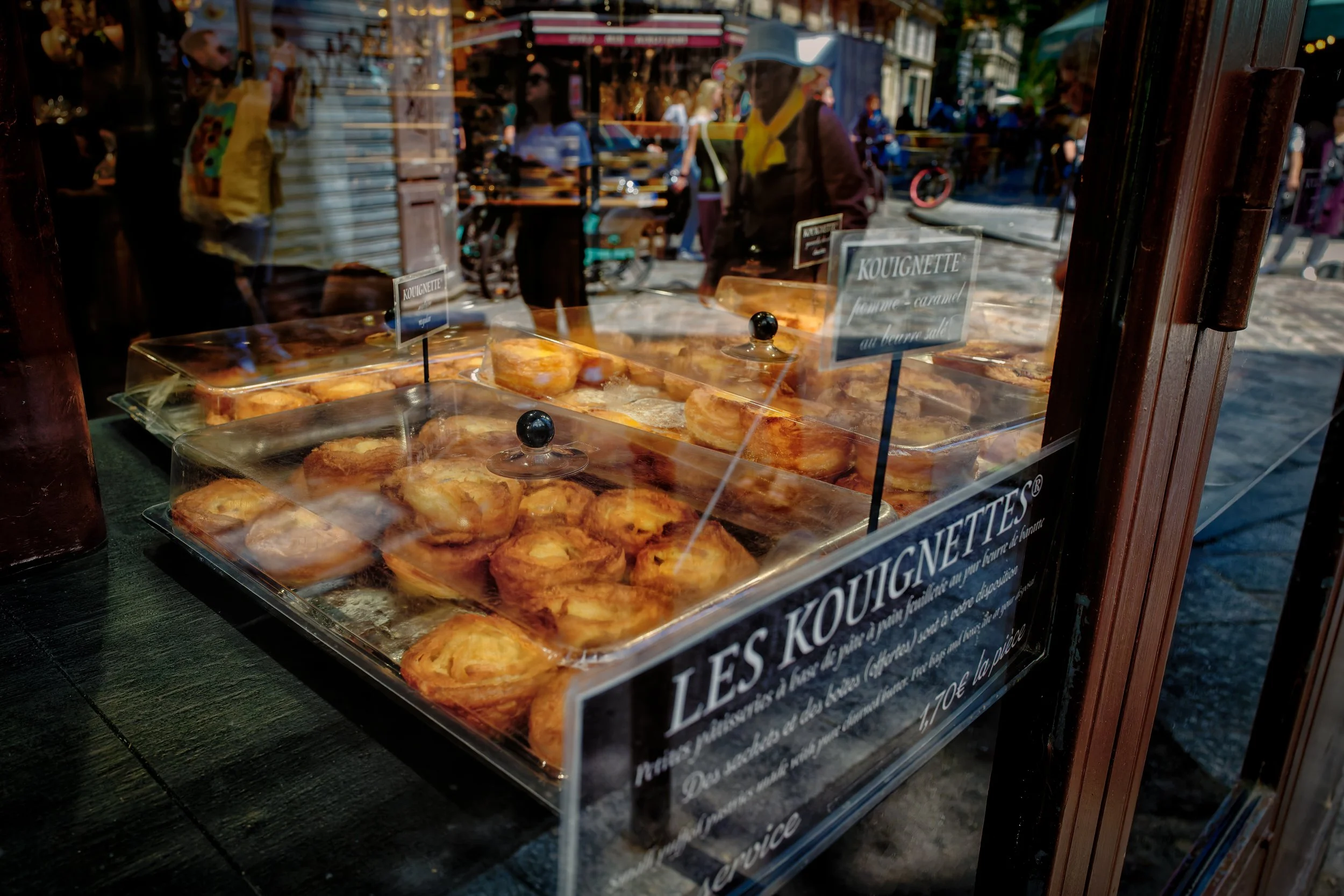
There may be reflections on glass, people moving behind a window, lettering floating across a storefront, or shadows stretching over a sidewalk. Individually, these elements can be interesting. Together, they have the potential to become something far more compelling.
I don’t think of these layers as obstacles that hide the subject. I think of them as visual conversations. Each layer contributes another piece of information, another question, another possibility. They invite the viewer to slow down and spend time with the image.
The challenge is not finding layers. Cities are full of them.
The challenge is recognizing when those layers begin to work together.
Sometimes all that is missing is a single person entering the frame. Sometimes it’s a gesture, a glance, or a fleeting alignment between foreground and background. Those moments may last only a fraction of a second, but they are often what transforms an ordinary scene into a photograph that rewards repeated viewing.
When I make photographs, I am rarely searching for a single subject. I am searching for relationships—between people, reflections, architecture, light, color, and time.
The more I photograph, the more I realize that the strongest images are often those that reveal themselves gradually. They don’t give everything away at first glance. Instead, they invite the viewer to look again, discovering new connections with each viewing.
For me, that’s the beauty of seeing in layers.
Everyday Beauty
Everyday Beauty is found in the moments we usually pass without noticing—the brief alignments of light, color, gesture, and human presence that make the ordinary quietly extraordinary.
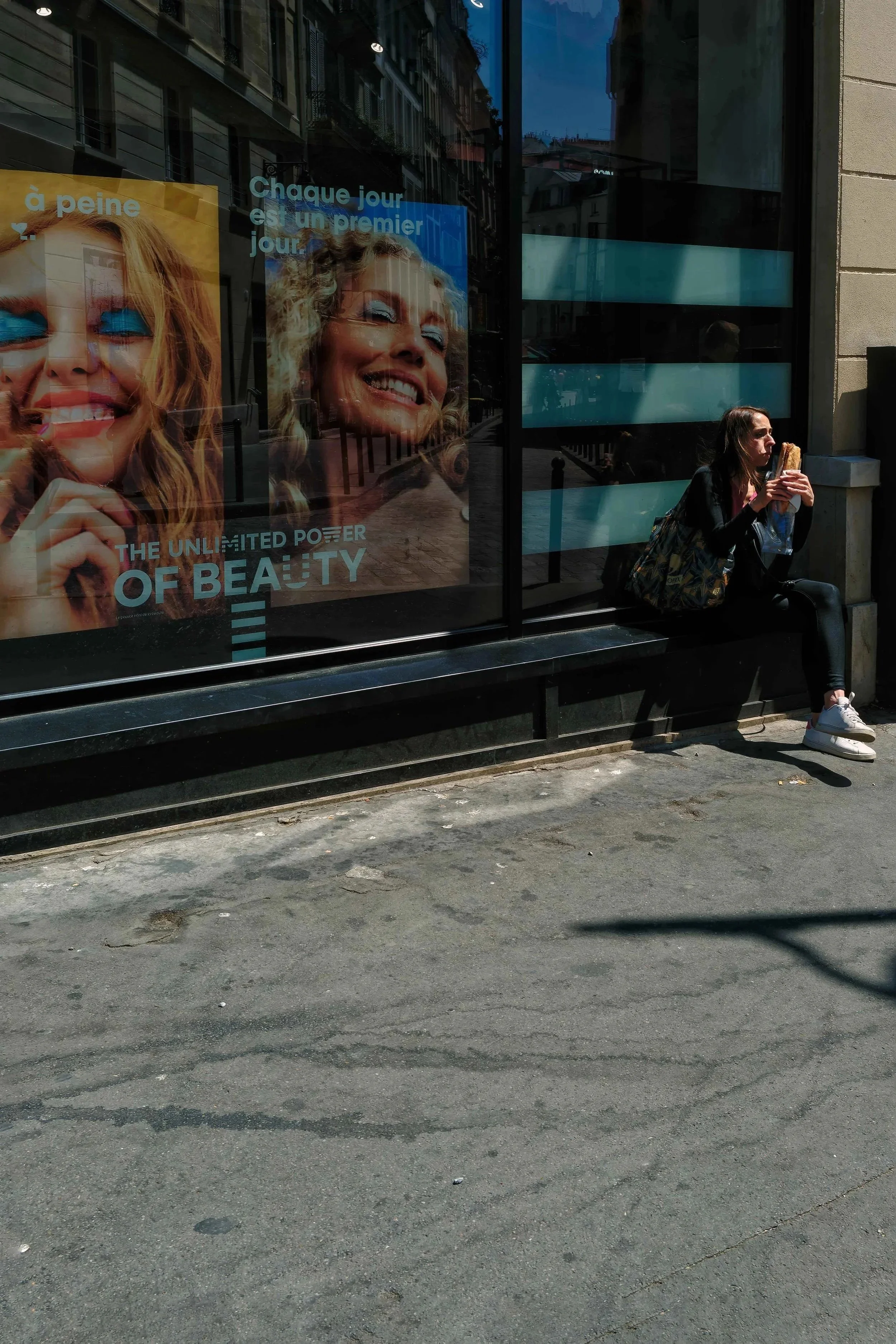
Street photography isn’t a search for extraordinary events. More often, it’s an exercise in recognizing that ordinary moments are already extraordinary—we’ve simply stopped noticing them.
A reflection in a bus window. A hand reaching for a menu. Layers of posters peeling from a wall. A passing glance that lasts less than a second.
These are not dramatic moments. They won’t stop traffic. Most people walk past them without a second thought.
I try not to.
When I walk with a camera, my goal isn’t to find something unusual. It’s to remain present long enough for familiar places to reveal themselves differently. The streets don’t need to change. I do.
Many of the photographs in my work are built from everyday interactions between people, light, glass, weather, and the city itself. They are quiet moments that often disappear as quickly as they appear. Photographing them requires patience more than speed, attention more than anticipation.
The beauty has always been there.
Sometimes all that’s required is the willingness to slow down and see it.
The Importance of Waiting
I often recognize a photograph before it fully exists. Waiting allows the light, reflections, gestures, and human presence to come together — turning patience into an essential part of seeing.
Street photography is often described as the pursuit of the split second—the sudden gesture, expression, or coincidence that disappears almost as soon as it is seen. Much of the way I work, however, depends on something slower.
I often recognize the photograph before it fully exists.
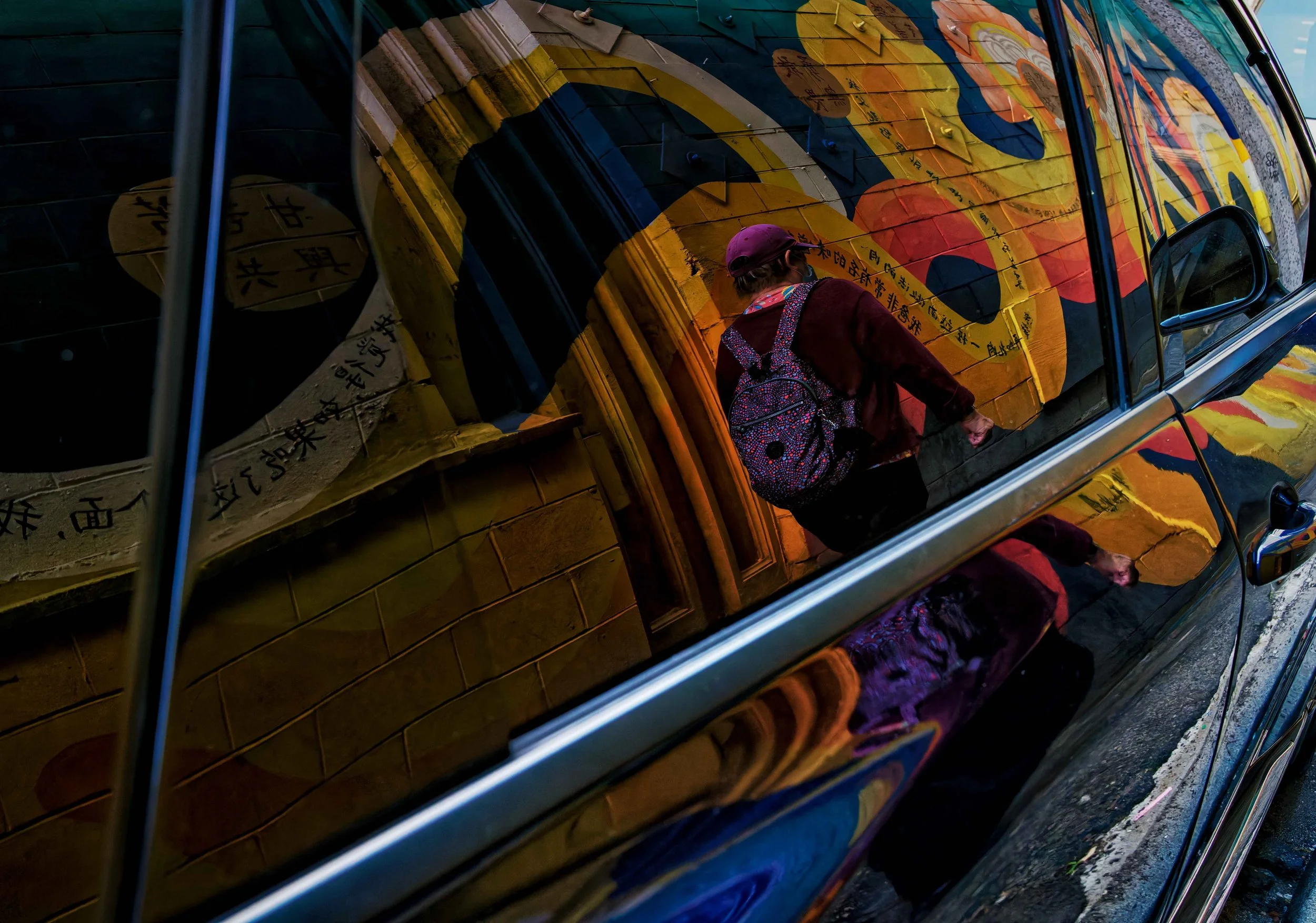
A reflection may suggest a structure. A patch of light may define where a figure needs to appear. Colors may begin to form a relationship across a window, a vehicle, or a storefront. At that point, making the photograph becomes an act of waiting—not for just anyone to enter the frame, but for the person whose presence completes what I have already begun to see.
Waiting is not inactivity. It is sustained attention.
The longer I remain with a place, the more clearly I understand what the photograph requires. I notice how people move through the space, how reflections change with their position, and how certain gestures briefly connect otherwise separate parts of the frame. Sometimes the anticipated photograph never arrives. At other times, the right person appears and the scattered elements suddenly become coherent.
The resulting exposure may take only a fraction of a second, but the photograph may have begun much earlier.
Patience does not guarantee a successful image. It does, however, create the possibility of making something more deliberate than a reaction—an image shaped not only by timing, but by recognition, attention, and trust in what the scene might become.
Looking Again
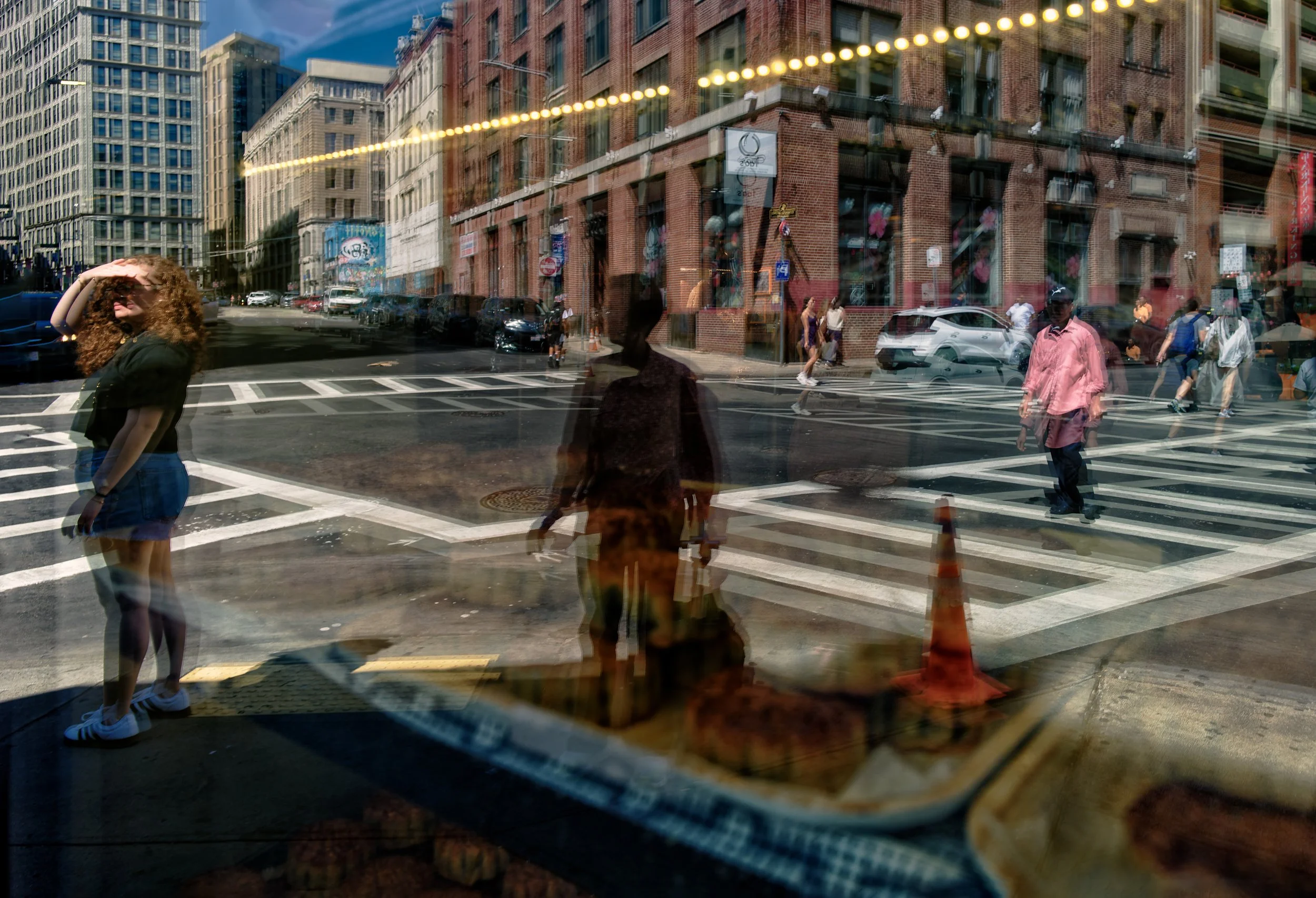
Returning to familiar streets can reveal what has been there all along. Last weekend in Boston’s Chinatown reminded me that seeing differently can matter more than finding somewhere new.
Returning to familiar streets in Boston’s Chinatown:
I’ve photographed Boston’s Chinatown countless times. Certain corners have become so familiar that I can almost anticipate the rhythm of the pedestrians, the flow of traffic, and the way light settles onto the storefronts. Yet the neighborhood continues to surprise me.
Last weekend was a reminder of why I keep returning.
One intersection in particular has been part of my walks for years. I’ve crossed it, photographed it, and stood there waiting for moments to unfold more times than I can count. Yet it wasn’t until this visit that I noticed the reflections stretching across the pavement and gathering in the crosswalk. The scene had always been there. I simply hadn’t seen it.
That is one of the enduring lessons of street photography: familiar places are never truly exhausted. We often imagine that discovery requires travel to somewhere new, when in reality it may only require looking more carefully at a place we already know.
As evening approached, storefront windows began to glow and the streets took on a different character. Reflections appeared and disappeared with each passing pedestrian. Layers formed briefly and then dissolved. Small gestures, expressions, and alignments emerged for a fraction of a second before giving way to something entirely different.
These fleeting moments are what continue to draw me back to Chinatown. The neighborhood is not a static subject but a constantly changing stage where light, people, weather, commerce, and chance intersect in endlessly different ways.
That weekend wasn’t about finding something new.
It was about seeing something familiar differently.
And sometimes, that’s enough.